Here is the Lingo on Lingo
I bought into the hype and here’s what I think…
It’s been a few years since continuous glucose monitors (CGM’s) became mainstream in diabetes management, but roughly just a year or so since I started hearing the chatter of people who were not diabetic monitoring their blood sugar. I was hearing the conversation mostly in the nutrition space where the overall consensus was that it simply wasn’t necessary and also would most likely cause someone added stress or anxiety to monitor something like blood sugar so closely. While I can see that argument, I have a different take, so I wanted to experience it for myself.
Enter a constant stream of ads for Lingo. I’m guessing the targeted ads were popping up for me because I spend a LOT of time talking about blood sugar, diabetes, and CGMs in my day job as a renal dietitian, where most of my patients are diabetic. Side bar: uncontrolled diabetes usually results in end-stage renal disease, also known as kidney failure. Something most people don’t know and diabetics are never told. I also just want to note that I think diabetes education in this country is mostly wrong when it does exist, which sadly isn’t often enough in my professional opinion. It blows me away how many patients I deal with on a regular basis who are diabetic, who were never provided a single hour of nutrition education for diabetes management, and don’t have any understanding of how what they eat affects their blood sugar.
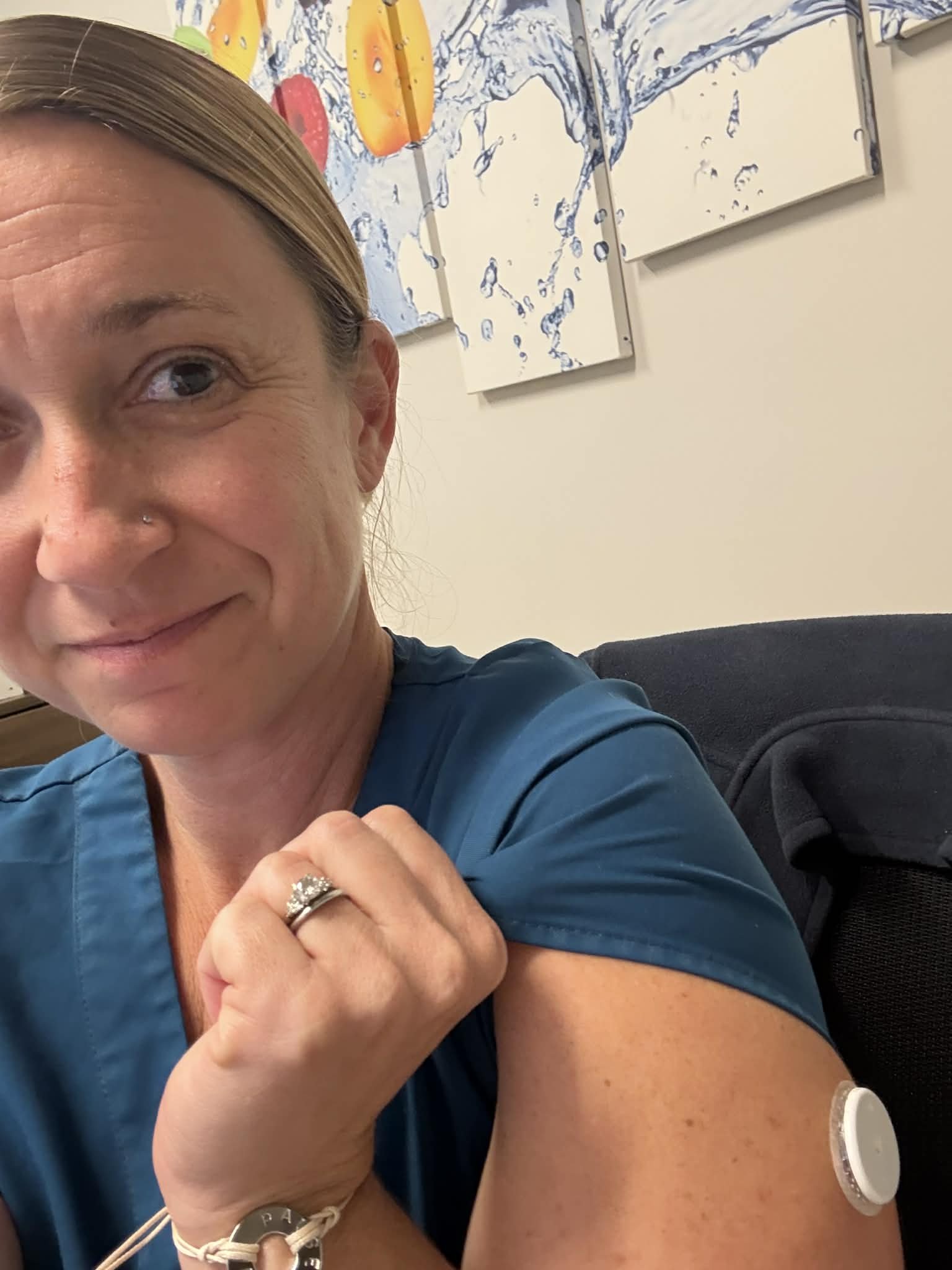
Needless to say, I talk about it a lot, and I was curious. I was curious if the meals and snacks I think are well-balanced are actually as balanced as I hope. I was curious if any of my mood or energy swings are connected to my blood sugar. I was curious if my middle-of-the-night waking could be a blood sugar issue. And mostly curious if the advice I give my patients for better blood sugar balance actually works. I wanted to see if the myths are true that fasting really is good for you, or if drinking your coffee before you eat anything in the morning spikes your blood sugar. Does simply walking really lower it? Does stress really increase it? Again, all things I was taught to be true as a dietitian, but wanted to actually put to the test. So, I clicked on the ad and bought a CGM over the internet. A sensor I stuck on my body for 10 days. It connects to an app and gives you your blood sugar readings in real time. A real treat if you’ve ever used a regular finger stick glucose monitor. You can track your food and exercise along with it to see how those things affect your glucose readings.
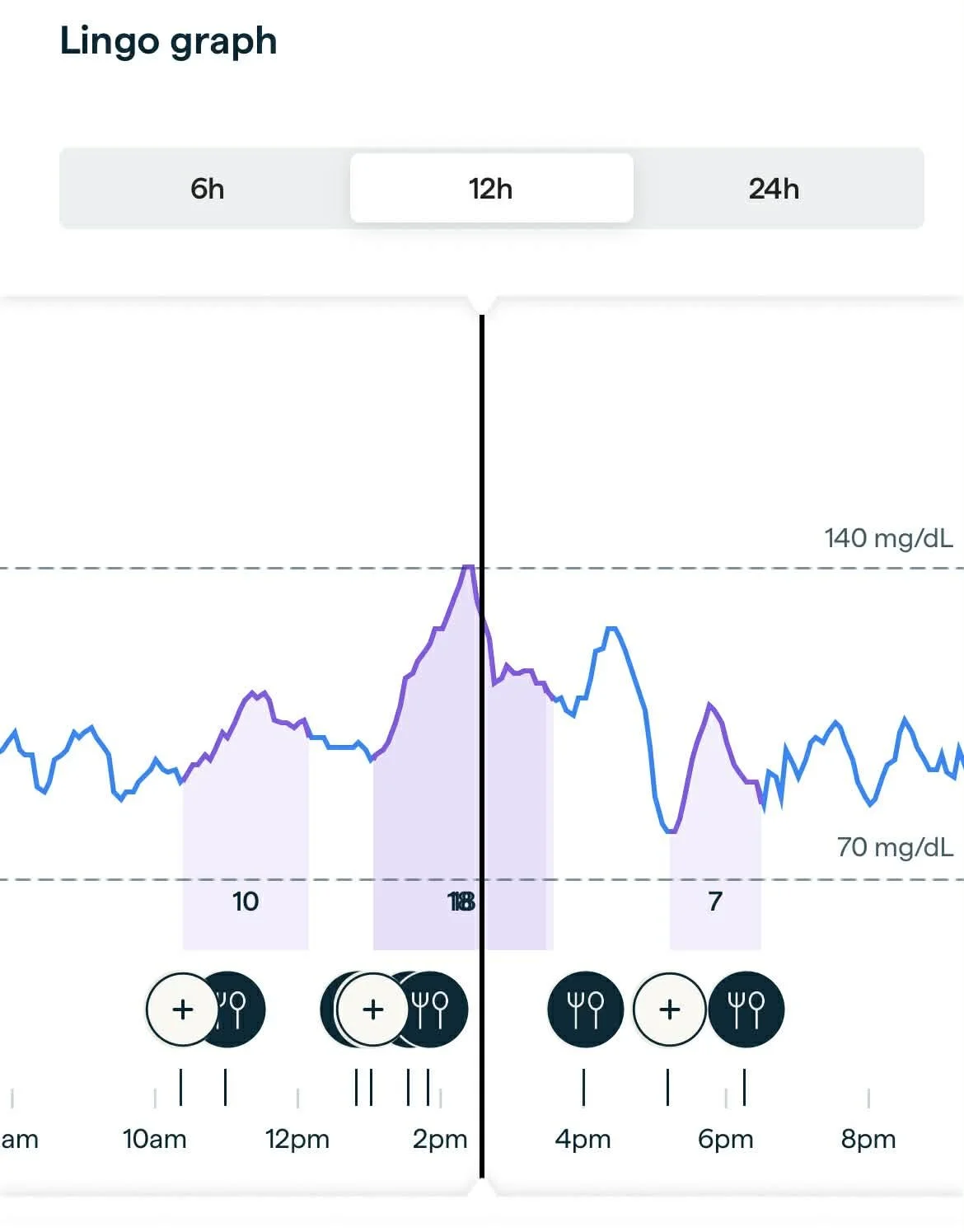
Here is what I learned:
-Most of my meals and snacks were well-balanced, and I was able to maintain “normal” blood sugar levels during the day.
-My blood sugar was VERY low in the middle of the night. We eat dinner with our kids around 5:30, I go to bed around 8:30/9pm, and typically don’t eat anything before bed so that was not a surprise to me but I do think those low blood sugars are part of why my sleep isn’t as optimal as it could be.
-While I am someone who eats before my coffee in the morning because it makes me feel better, simply waking up and having coffee without any food did not change my blood sugar. However, I drink my coffee black, no added sweeteners, milks or creamers so that for sure would change that.
-Any time I went long periods of time without eating, the meal following a “fast” my blood sugar was always elevated. To me, this was a really clear picture that intermittent fasting really isn’t great for our body or blood sugar, and that most people would do better with smaller, more frequent meals.
-Rice by far spiked my blood sugar the highest, even in small appropriate portion-sized amounts and consumed with protein. Rice is a higher glycemic index food, so also not surprising, but, ½ cup of rice raised my blood sugar way higher than 2 cups of pasta.
-Aside from rice and fasting, the only other blood sugar spikes I had in 10 days were from Kombucha (on an empty stomach) and Starbucks (tall soy dirty chai latte). The kombucha is a roughly a once a week thing for me and I recently started making my own so that I could make it with less sugar and the Starbucks is a very rare, maybe once-a-quarter treat. The week I was wearing my monitor, I happened to be traveling, so I treated myself in the airport. I knew the soy milk had some sugar, and for the record, I don’t eat or drink soy typically, especially when not organic but they were out of almond milk, but truthfully prior to this didn’t even consider that the chai “concentrate” did as well. This might sound naive, but I assumed it was actually brewed chai, not a syrup, so that’s super disappointing and will for sure no longer be something I order.
-Exercise for sure lowered my blood sugar, and stress for sure increased it. The dip from exercise was much bigger than the rise from stress.
-The advice I give my patients is actually pretty spot on: smaller, more frequent meals, balanced meals and snacks that contain a protein, carbohydrate, and fat source, a small snack before bed, and walking at least 30 minutes a day are pretty standard but gets the job done.
-Wearing the CGM didn’t necessarily produce any added stress or anxiety, though I did find myself hyper-fixated on it more than I thought I would have and missing it once my 10 days were over, wondering what my blood sugar was doing. I think, depending on the person, I could see how this could be problematic.
Overall thoughts….I think everyone should do this at least once! It was super interesting and super helpful to see in real time how food, exercise, and stress affected my blood sugar. While I am someone who can feel when my blood sugar is low or even high, I don’t know that most people are that intune with their bodies, so this could be really helpful in learning those cues. As an RD, I always tell people it’s really helpful just to write down what you eat, not to count calories or macros, but there is a tiny subconscious part of your brain that makes better choices with some accountability, even if it’s just to your own notebook. I felt like this was similar in the sense that it made me want to make better food choices because I know I could see if I didn’t. It gives your brain the challenge of making it more like a game, if that makes sense. Eat this thing, graph stays in range, eat this other thing, graph goes out of range. I think that could be a really effective tool for a lot of people struggling with making healthy changes. At roughly $50 for a 10-day sensor, this isn’t the most economical thing to do on a regular basis, but a fun experiment for better overall health, for sure.
Here is the thing, most people only think of blood sugar in relation to diabetes, so if we aren’t diabetic, we aren’t worried about it, but blood sugar plays a major role in a lot of other functions of our body. It affects our energy and brain function, vascular system, organs, and metabolic and hormonal health. In a day and age where most people have little to no energy, are walking around in a fog with unbalanced hormones and crappy metabolic health, I can’t help but think focusing on our blood sugar would help improve overall health, with a bonus of also hopefully helping to prevent more Type 2 diabetes.
If you are considering doing this, check out Lingo. I would recommend actually purchasing the 2 sensor option. Wear one for 10 days, do your normal thing, eat your normal diet, normal exercise routine, take inventory of what your body's doing, then take that information to make some changes for better overall blood sugar management for a few weeks, and then try it again with your second sensory to see the change yourself. I could also see this being a really great option for pregnant women as a way to monitor their blood sugar to avoid having to do the glucose test or sticking your finger multiple times per day. I had actually purchased an additional one to use on my child, who I think struggles with stable blood sugar, only to find out it’s not recommended to use on kids because you can get false readings, might still try it anyway, but for sure waiting for a kid-approved option to purchase over the counter as well.
If you do decide to try this out, I’d love to know what you find out!